What is meant by project management?
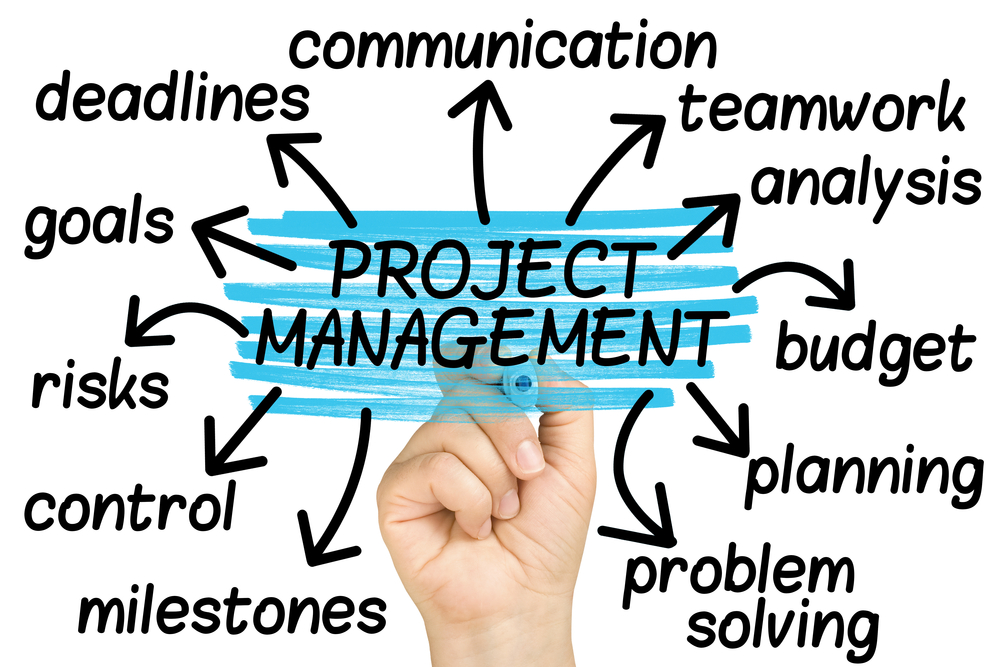
In society almost everything we do can be described as project management. From buying our weekly groceries to building a house, project management skills are involved. Project management is therefore an essential part of our everyday activities in society and the economy. On the other hand, simpler events like planning a birthday or an outing with the family can be described as project management too. The idea of project management is therefore not new. It is a skill we use in our daily lives for attaining specific objectives. Even the diary we jot our scheduled activities into, is a form of project management!
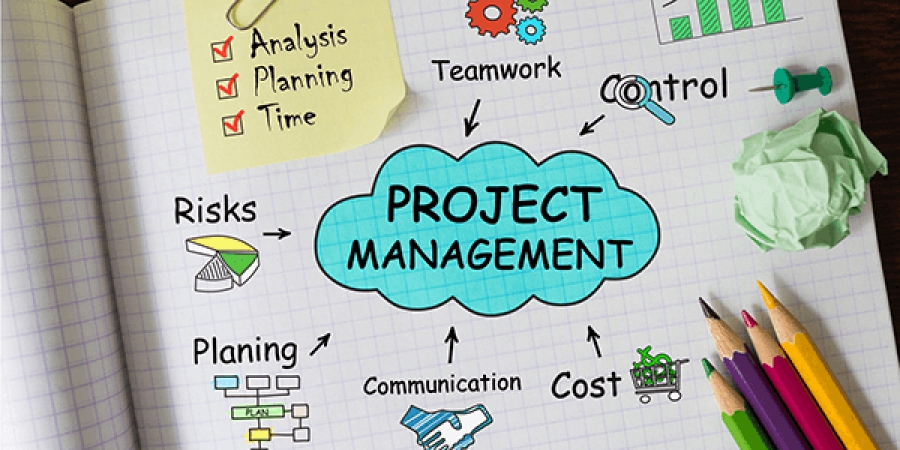
Project management as a skill and field of study is essential for successful organisational management. As a formal management function, project management is found in government, industry and almost any other organisation. Often Project Management is called a variety of names such as Programme Management, Product Management or Construction Management. Project management, as a field of action, can often be seen in outreach programmes or self-help schemes. Whatever the objectives, project management involves a number of phases and skills which are essential to a project’s completion. To get a better understanding of this process the term «project management» can be further broken into «project» and «management».
The term «project»
A project can take on a number of forms. A project can be described as a package of ideas, resources and measures to achieve a set of specific objectives (or an objective), within a planned time period. The main features of a project are, that it:
- Does not recur and is completed within a certain time period,
- Is identified by set launch and completion dates,
- Is financially budgeted for, and
- Uses various resources (money, people, materials, equipment).
A number of short-term projects may be integrated into programmes which are usually implemented over a much longer time period. Subsequently, a major difference between programme management and project management is the scale and time period involved. Projects are often seen in organisations or group co-operatives as the «building blocks» of programmes and organisational management. However, projects cannot be completed successfully without good management.

The term «management»
Management is a function or process that every organisation or individual needs to apply in order to get things done. Management involves the utilisation of human and material resources for a particular purpose or strategy so that desired goals or outputs are achieved. In other words, a manager is a person who guides and controls people and resources so that a specific task or objective is met. This process involves directing and coordinating existing and potential abilities, talents, group co-operative effort, tools and equipment, information, and money. In a group or organisational situation a manager needs a number of specific skills to manage successfully, namely:
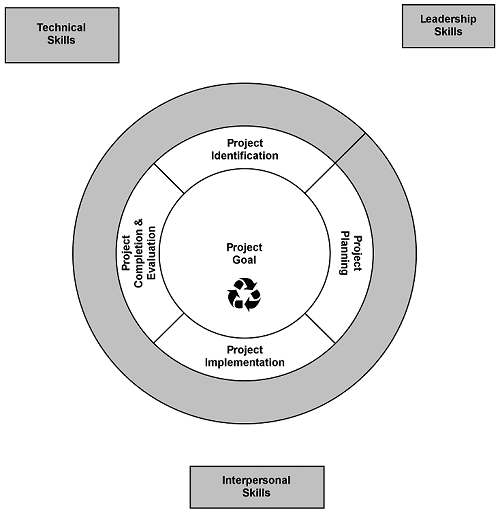
- Technical skills (Planning, financing, problem-solving),
- Leadership skills (Organising, motivating, team-building), and
- Interpersonal skills (Listening, communicating, conflict resolution, negotiation)
All three skills are discussed in Unit 6, 7 and 8 respectively.
From these qualities, it can be seen that a skilled manager is able to choose the right technique or way of doing things in a specific context.

The term «project management»
Although the term is commonly used, no specific definition exists. If you ask two different people what project management means to them then you will often have two different answers. Often though, when one talks of project management one is referring to a process of managing a project. However, as explained earlier, this process is by no means simple. Project management involves a number of interrelated activities which are needed to achieve a specific goal or set of objectives. From this statement and the previous descriptions, two key features of project management can be identified, namely that:
- It focuses on completing a project goal within a specific time period, and
- It makes use of resources on a part-time basis and requires basic management skills.
In summary, project management involves the use of material resources (equipment, stationary, communications such as computers and telephones), design and planning, and leadership and supervisory skills. Unlike general management though, project management is not an ongoing process. It has a temporary life-span.
The need for project management
Project management is needed in almost any situation which requires strategic planning so that a goal or set of objectives can be completed by a certain date. In summary, project management helps to:
- Eliminate or reduce uncertainty,
- Improve efficiency in achieving the objective/s set out,
- Clarify set goals or objectives,
- Become aware of alternatives, and
- Provide the basis for controlling the process of fulfilling the objective/s set.
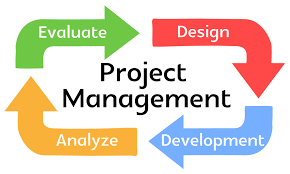
Correctly applied, project management ensures that the right information is collected and assessed, realistic priorities established, alternatives laid out and considered, relevant problems and issues accounted for, and decisions taken according to a systematic analysis of all these factors. Project management is therefore an essential technique used to attain planned goals in the most cost-effective way by the optimal use of resources. This involves a process known as the «project cycle».

The project life cycle
All projects go through a «project cycle» or series of phases for completion, namely:
Phase one: Project identification
This phase involves identifying project ideas and needs. The individual or group responsible for a potential project refine an idea or concept into a project. Such a person or persons draw up a project proposal which identifies tasks which suit their objectives. If a project is considered to be «feasible», in other words realistic or has attainable objectives, then the next phase, the project planning phase, follows.
Phase two: Project planning
This phase involves preparing the project by means of a plan or design of what the project entails, in particular: Planning the time length or «life-span» of the expected project, its projected costs, and the preparation of possible task alternatives in the event of unexpected changes. Consideration is given to the needs, alternatives and techniques that may have to be applied, and once completed, the implementation phase follows.
Phase three: Project implementation
This phase involves implementing the plans or the actual development of a project. The project is implemented in a planned and controlled manner. This includes supervision and monitoring the actual progress of a project within the scope of the plan. If successful, the project then requires closing and the results are compared with estimations determined earlier in the project cycle. Once this step is finalised then the final phase, project completion and evaluation, follows.
Phase four: Project completion and evaluation
This phase involves determining whether the objectives set out or needs identified in the earlier part of the cycle have been successfully concluded. Evaluating a project’s success is measured by contrasting the original goal or set of objectives with the final outcome. This is the last and final phase of the project cycle.
Although not an integral part of the project cycle, it is also useful to consider the success of some projects over the long term. Such a step would be especially helpful where similar projects could be planned for the near future and specific failures, problems and complications experienced during the current project need to be avoided.
In general, the distinction between these phases of the project cycle is often blurred in reality and their significance can vary according to the nature of the project. For example, the monitoring stage of the project cycle may not be essential in the case of building a dam or planning a holiday (yes it may be a project to!) while it is perhaps crucial for the construction of houses using new materials for the first time or in instances described in the previous paragraph.
Despite all these possibilities, it is important to remember that the project cycle is a process with each part of the cycle leading and building up to the next phase.





Publicar comentario