Differences between client and server
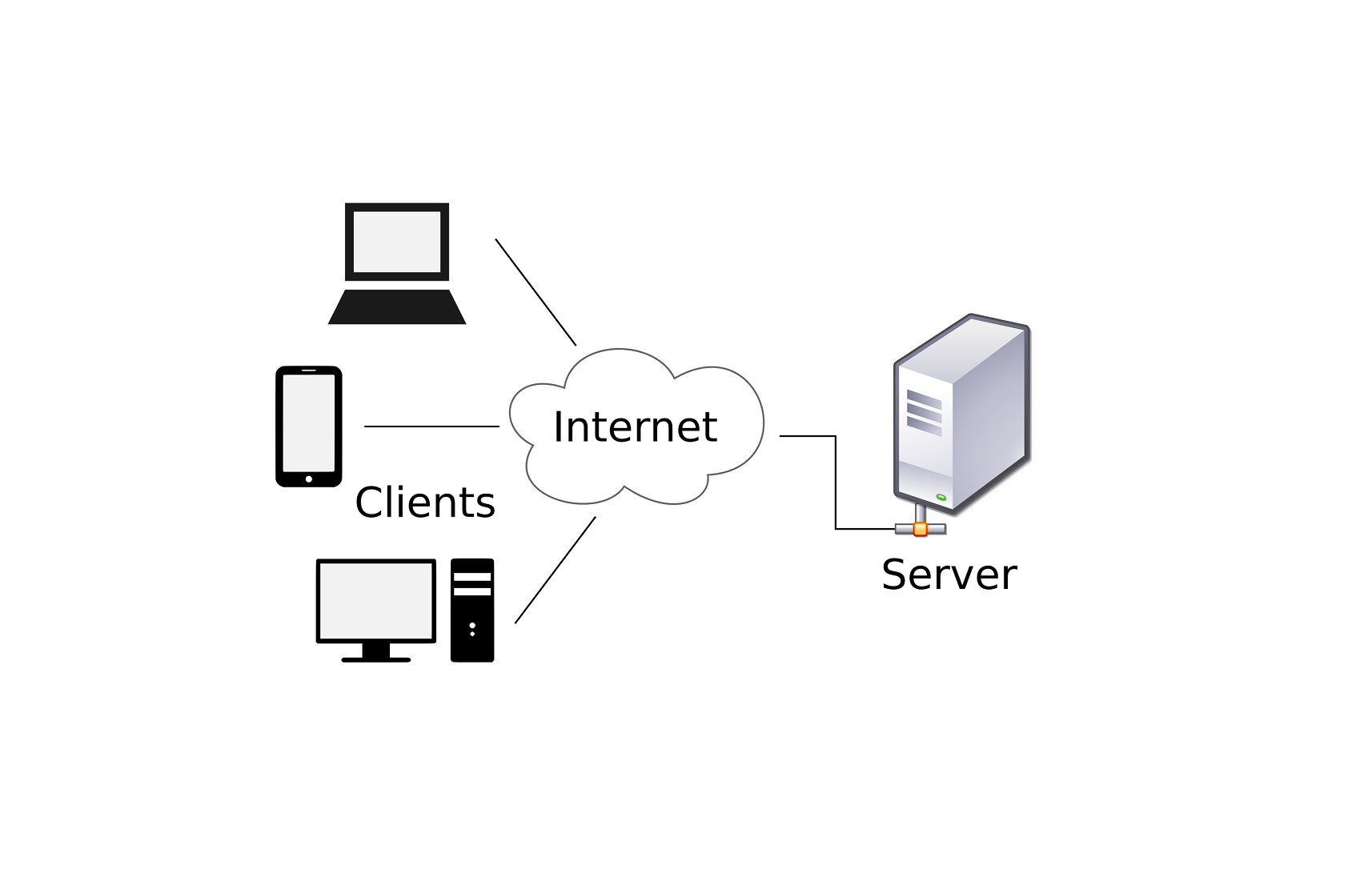
The difference between client and server is based on the type of hardware being used. A server uses specialized hardware and software to provide services to users who need them, a client is a device that accesses the resources of a server requesting information, but never provides resources to other users of the network.
Client are devices connected to the network such as personal computers, tablets, mobile phones, etc. All these devices have software that allows the user to do specialized tasks by connecting to servers. These clients have limited hardware only to serve a single user at a time but it should be noted that there are 2 types of customers, customers thick and thin customers.

Thick customers are the devices we use everyday like the personal computer, the phone, the tablet. All these devices are able to give all the software functionalities to the end user without having to connect to computing centers.
A thin client needs to connect to a server to perform all of its computational tasks and tasks and are used to connect to Cloud Computing infrastructures.
The positive points of thin clients are portability as they are small and only need an internet connection, these devices are usually low cost because of their hardware is not powerful because all operations are done on the server. Are easy to deploy as they do not have specialized software and therefore have a greater security that is located in the server. Instead they offer a disadvantage because if the server is inactive or not working we will not be able to connect the client and its use will be null, a constant validation of the data by the server is required and this can make the server hardware very expensive depending on how many computers you want to connect.
The strengths of having a strong client can directly affect the cost of our server making it cheaper because the thick client stores all its files and applications and performs all computing and processing tasks making immediate validation possible. If it fails the processing server would not affect the integrity of the thick client as it alone can be managed alone and could function normally. Instead it offers disadvantages in terms of cost as having many large clients would greatly i
ncrease hardware and security spending as there are more computers that must be protected by network threats.

The servers are normal computers but with specialized software, any computer can be a server but the high performance servers have much more complex and powerful hardware for a good operation and this can increase its cost this is because the servers have to deal with many clients simultaneously and have to be able to process many data at a time. Usually a server has redundancy of memory and space in case any component fails the server would still function normally. Servers typically have Linux operating systems and Windows Server Web servers.








Publicar comentario